
Anti-Icing & Easy-Deicing
DSAN-S2001-(III) Anti-Icing Coating
Hydrophobic coating designed to reduce ice adhesion and support ice shedding on exposed equipment surfaces.
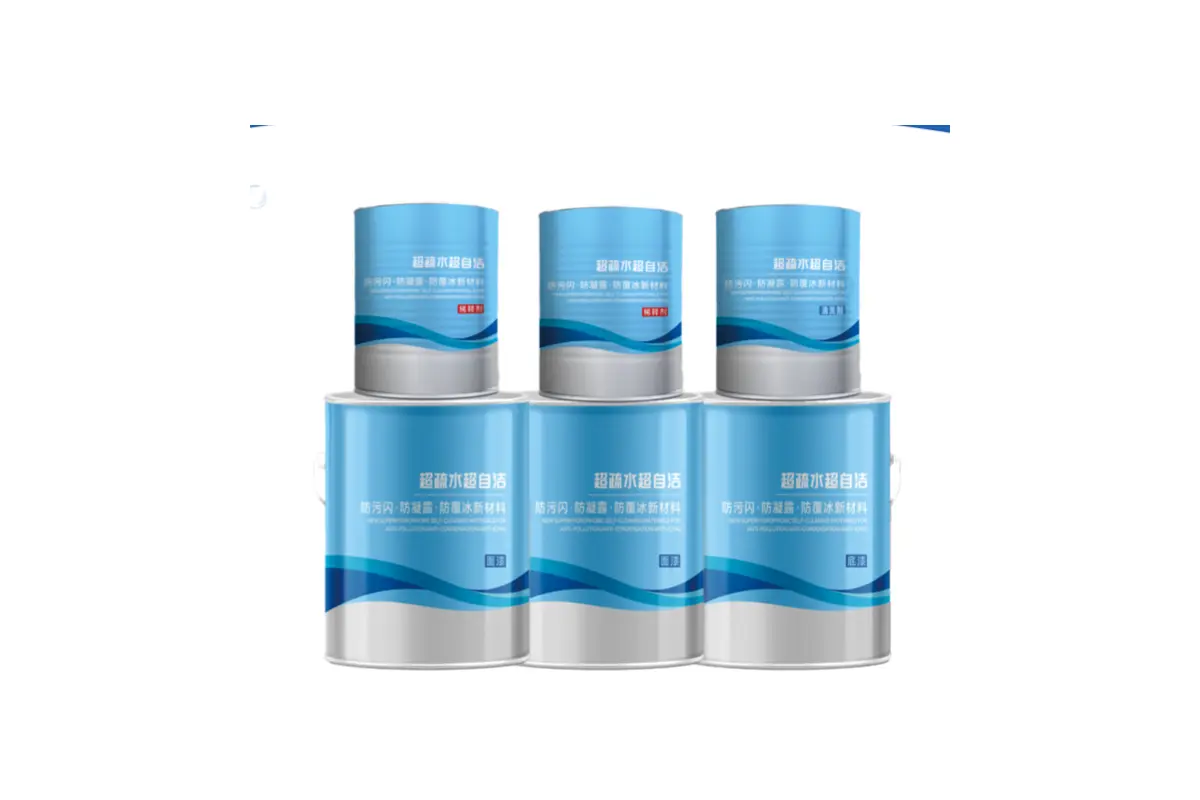
Product overview
Product and uses
DSAN-S2001-(III) is evaluated on winter-exposed assets using the relevant substrate, temperature, liquid-water content, wind, freeze-thaw cycle and mechanical exposure.
Selection starts with the substrate, equipment, operating environment and intended application process.
Key technical data
Key performance data for product evaluation and material selection.
| Property | Value | Condition | Standard / source |
|---|---|---|---|
| Water contact angle | >150° | Initial prepared coating surface | Published product information |
| Roll-off angle | <5° | Initial prepared coating surface | Published product information |
| Solids content | 57% | Condition not stated in the source document. | Published product information |
| Surface dry | <2 h | Condition not stated in the source document. | Published product information |
| Through dry | <24 h | Condition not stated in the source document. | Published product information |
| Theoretical spreading rate | 4–5 m²/kg | Calculated value; excludes application loss | Published product information |
| Damp-heat exposure | 1000 h | Reported as passed; test standard not stated. | Published product information |
| Salt-spray exposure | 1000 h | Reported as passed; test standard not stated. | Published product information |
| Artificial weathering | 3000 h | Reported as passed; test standard not stated. | Published product information |
Technical note: Values are presented with the stated conditions where available. Discuss the intended substrate and operating environment before product selection.
Selection support
Before trialling a blade anti-icing coating
Suggested evaluation steps, not a record of completed DSAN tests.
Define the icing problem
Describe the blade finish, icing conditions and intended result: delayed freezing, reduced accumulation or lower ice adhesion. Include preparation, curing and repair constraints.
Compare under controlled conditions
Agree acceptance criteria. Test coated and control specimens on the intended blade finish under the same temperature, water and airflow conditions. Repeat ice-adhesion and accumulation checks after relevant wear and freeze-thaw exposure.
Check evidence and remaining work
Request methods, specimen details, repeatability and results after conditioning. Use these to plan a limited blade-area trial and monitoring, not to assume service life.
Lower ice adhesion is not the same as preventing ice. Contact angle alone cannot establish blade performance or justify replacing ice detection, operating controls or active de-icing.
Discuss your blade conditions
Share the blade finish, site icing conditions and evaluation target to discuss fit and a possible sample comparison.
Inside DSAN
The company behind the materials.
A look at DSAN’s general laboratory, production and storage work. These photographs do not show performance testing of this specific product.
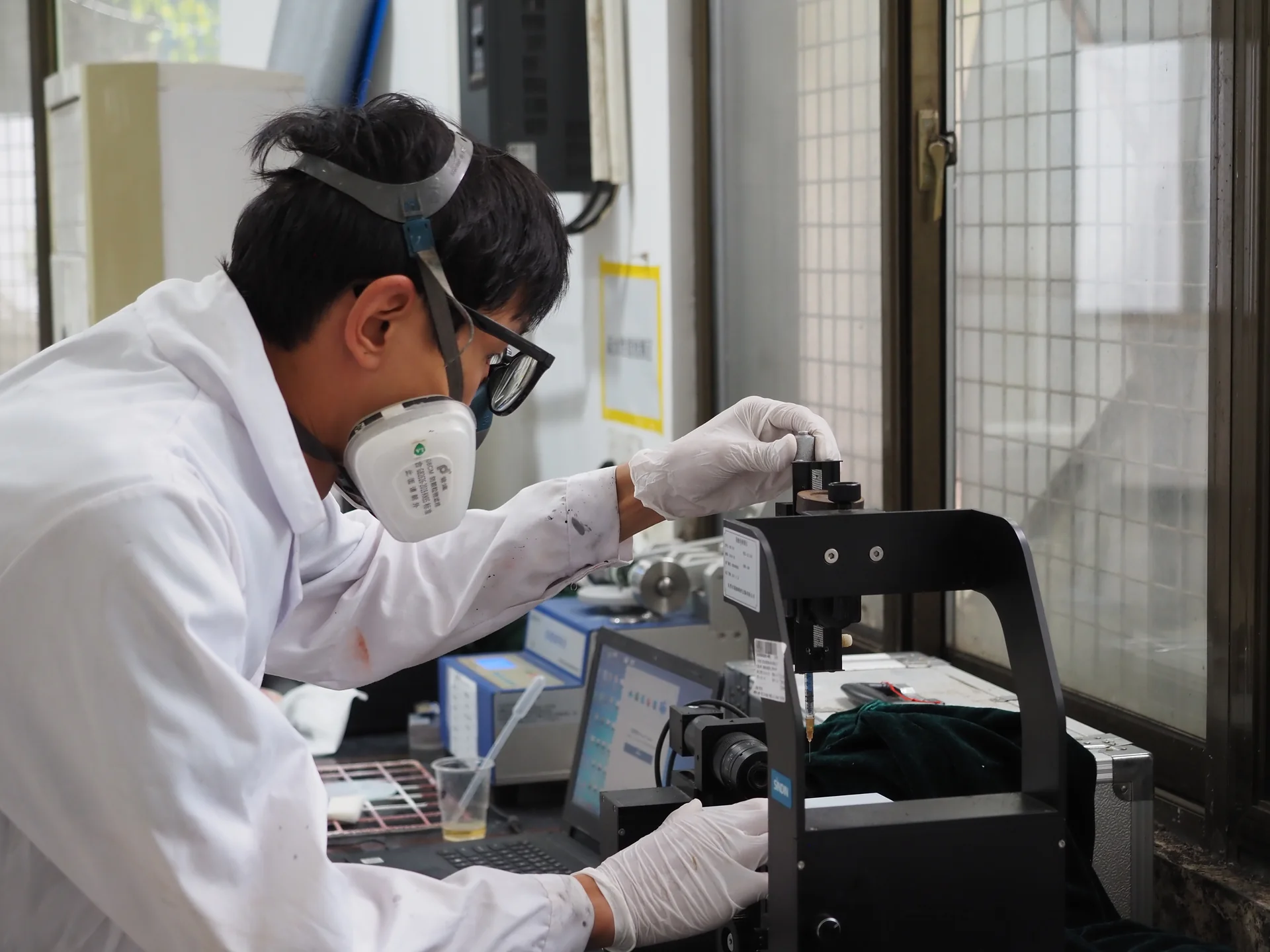
Laboratory work
A researcher working with laboratory equipment.
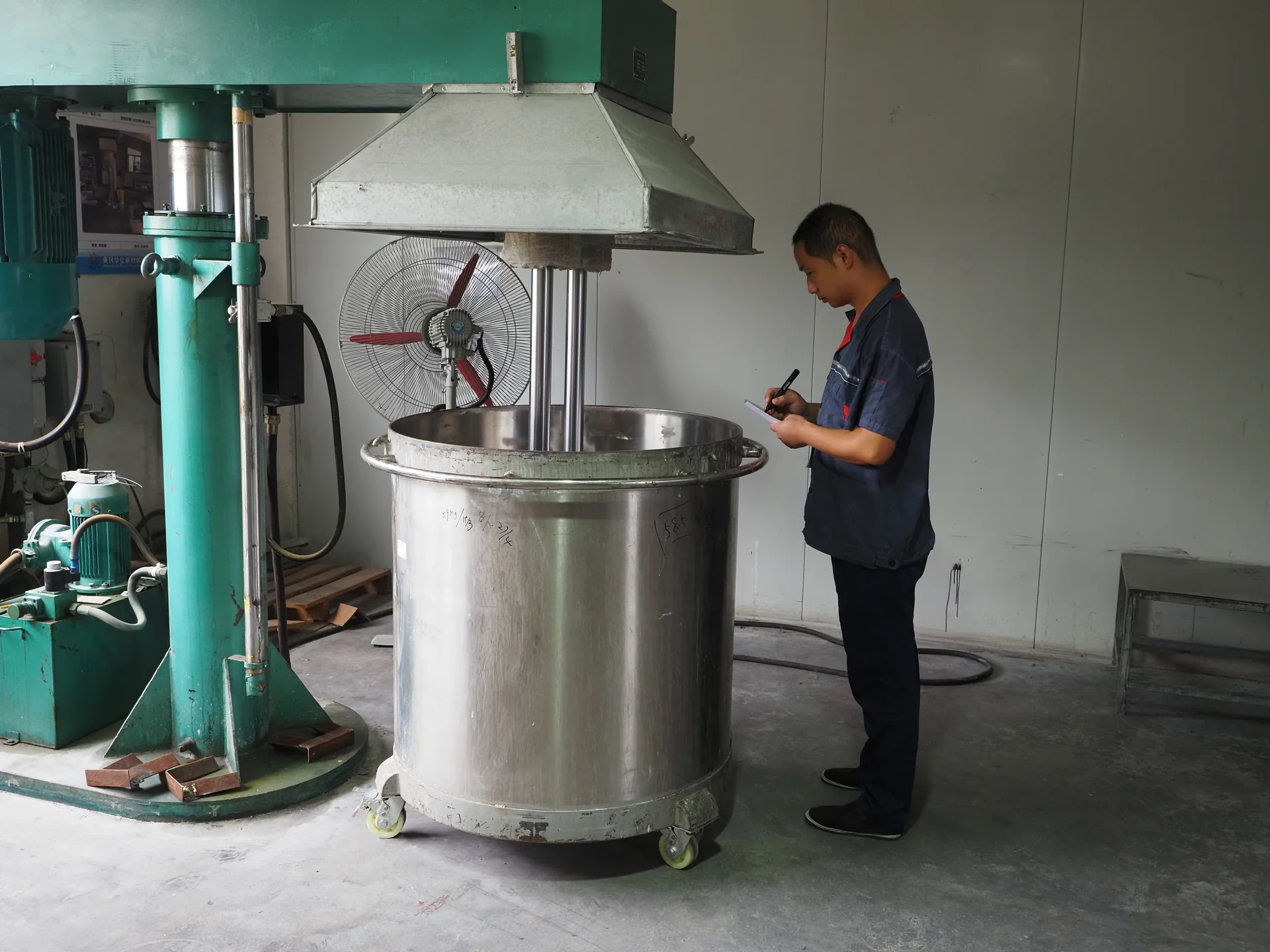
Coating production
An operator beside a coating mixing vessel.
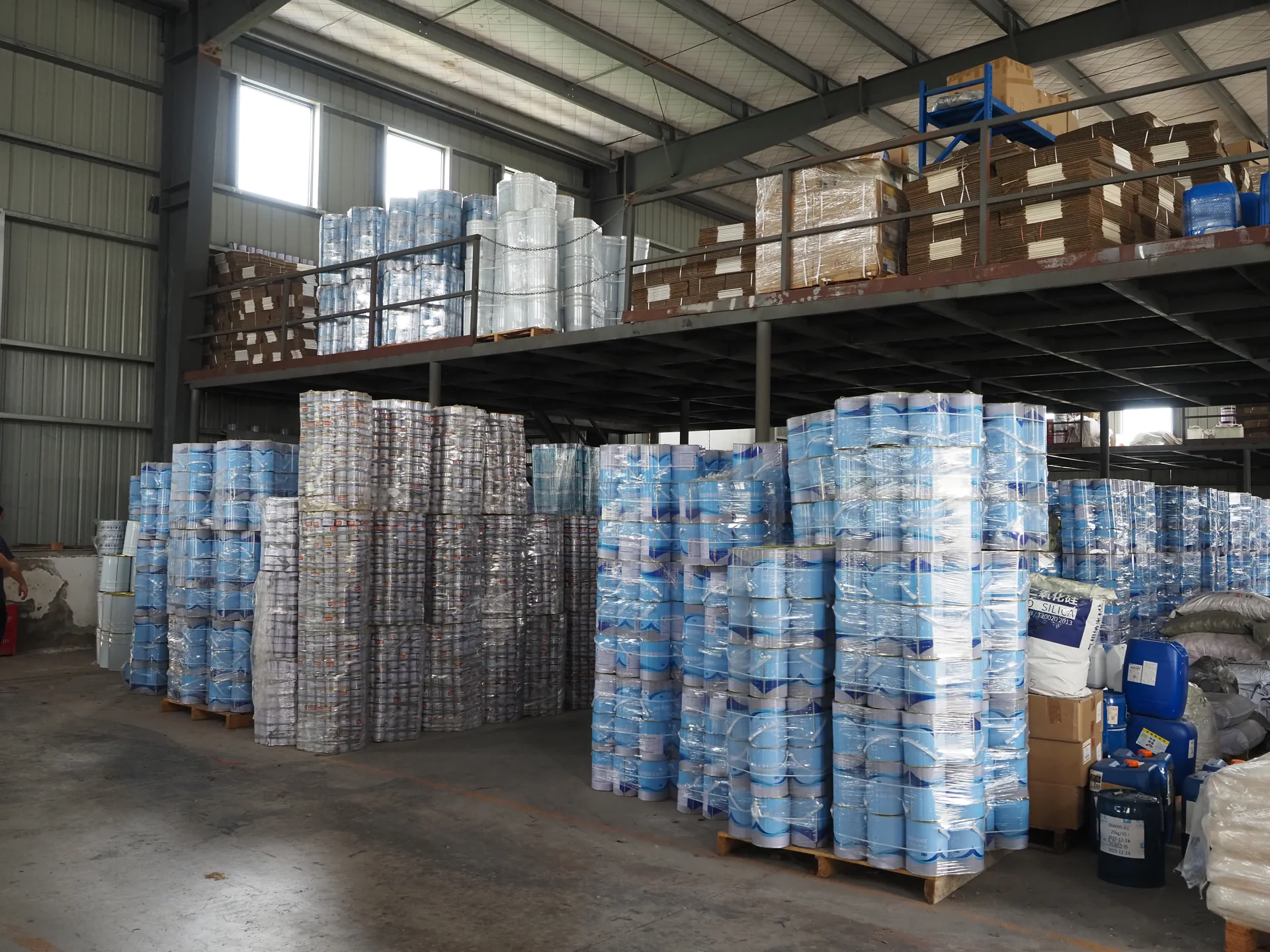
Material storage
Palletized containers in the storage area.
Applications
Typical equipment and surfaces.
Use this list to identify the closest equipment, surface and operating condition.
- 01Conductors and outdoor insulation
- 02Wind-facing surfaces
- 03Rail and switch zones
- 04Outdoor enclosures
Related applications
Start from a comparable equipment or surface problem.
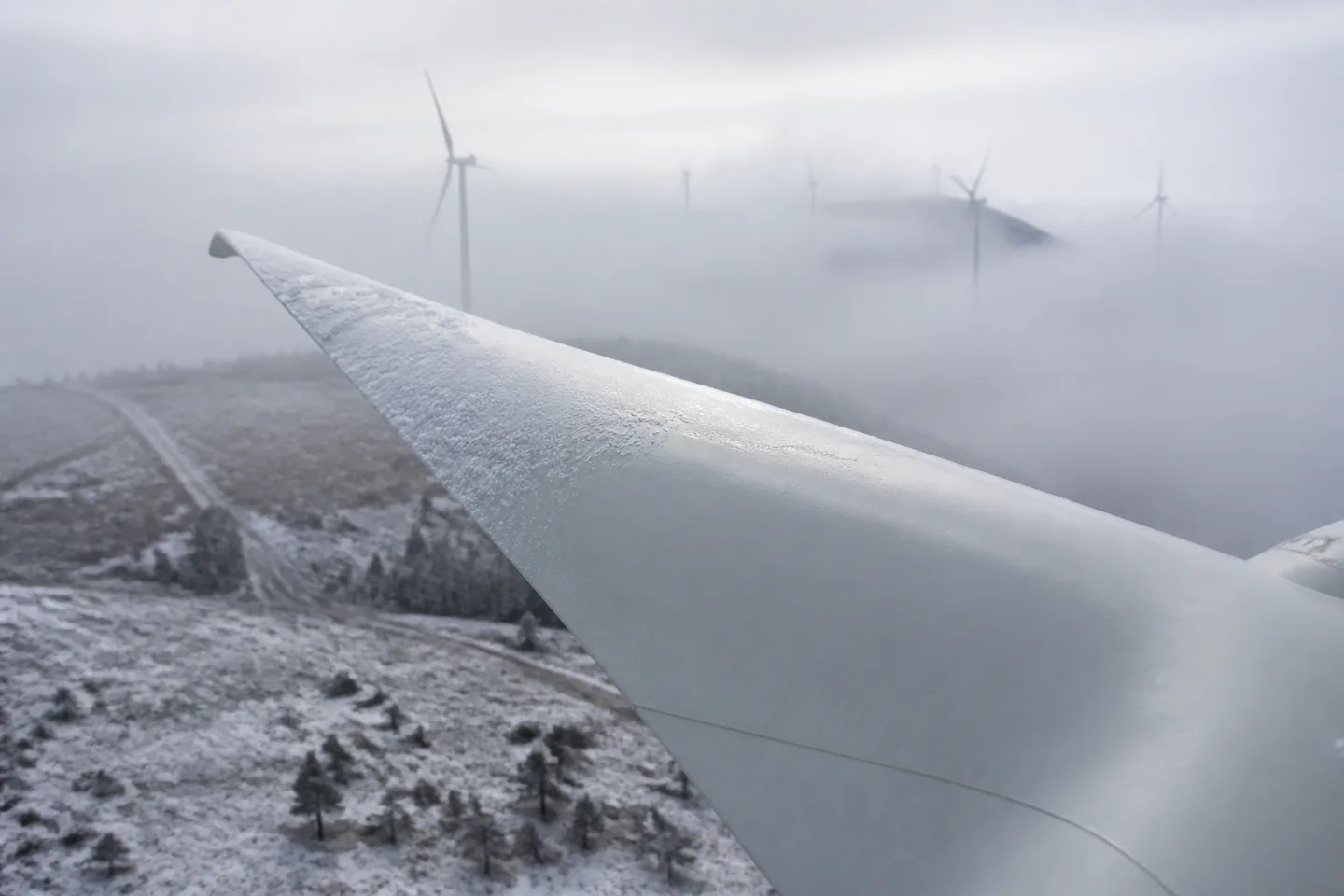
Related references
See the product in a comparable equipment context.
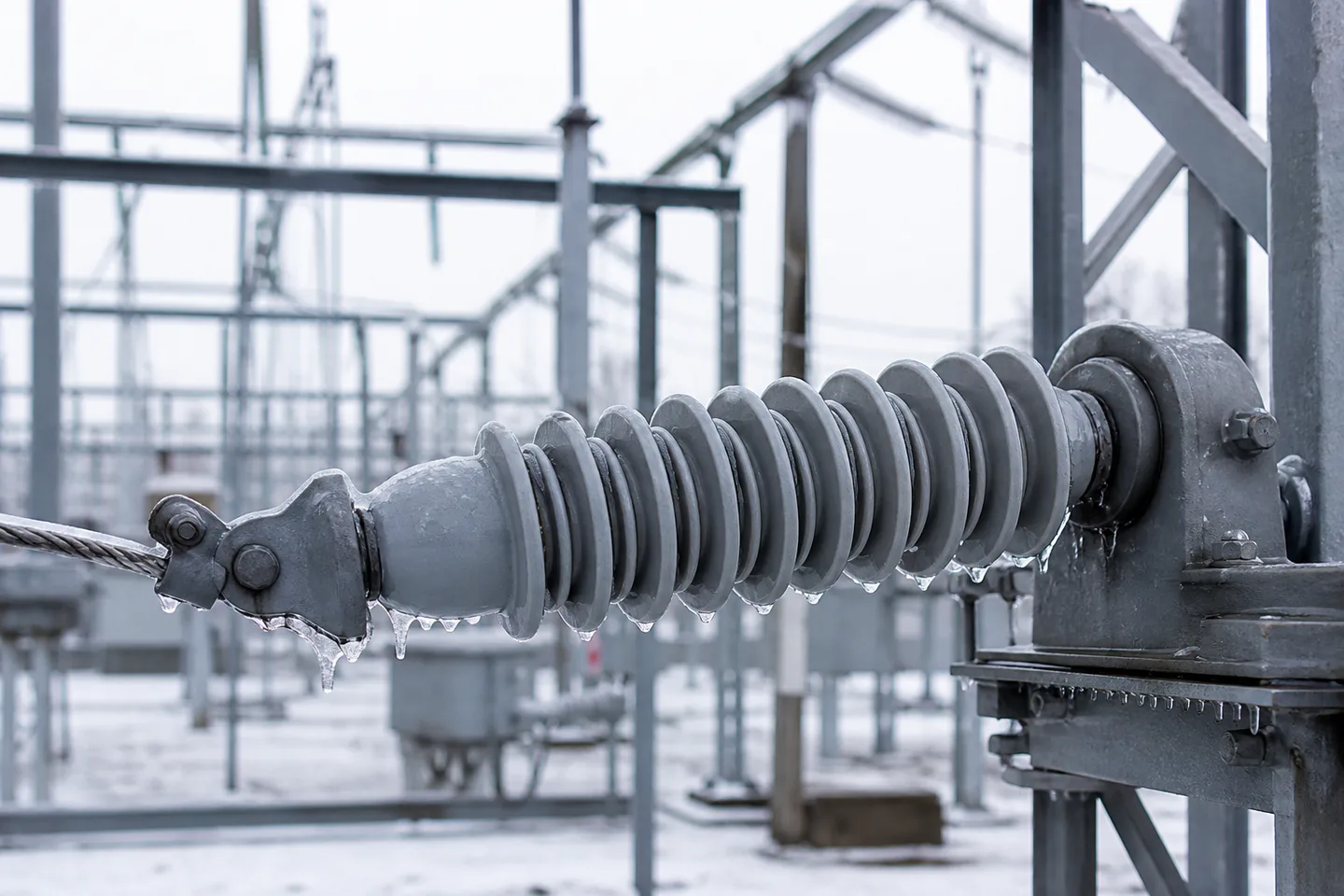 Illustrative visualPower transmission
Application reference · Hydrophobic surface
Transmission Assets in Ice-Prone Climates
- Challenge
- Winter icing and water-to-ice transition
- Material
- DSAN-S2001-DL (III) Anti-Icing Coating
Reference imagePower transmissionApplication reference · Hydrophobic surface
Xinjiang 750 kV Conductor Live Robotic Anti-Icing Coating Application
- Challenge
- Winter icing on exposed conductors together with the access and control requirements of live robotic application.
- Material
- Anti-icing functional coating
Joint development
Need a material adapted to your application?
We support joint development for formulation, material integration and application evaluation. Tell us the target properties and what your team has tried so far.
Related product: DSAN-S2001-(III) Anti-Icing Coating
Technical information
Published information for an initial product discussion.
Review the available product information, application context and related research before discussing technical fit.
- Product information
- Icing and freeze-thaw data
- Environmental test plan
- Relevant project cases
Related products
Other relevant material options.
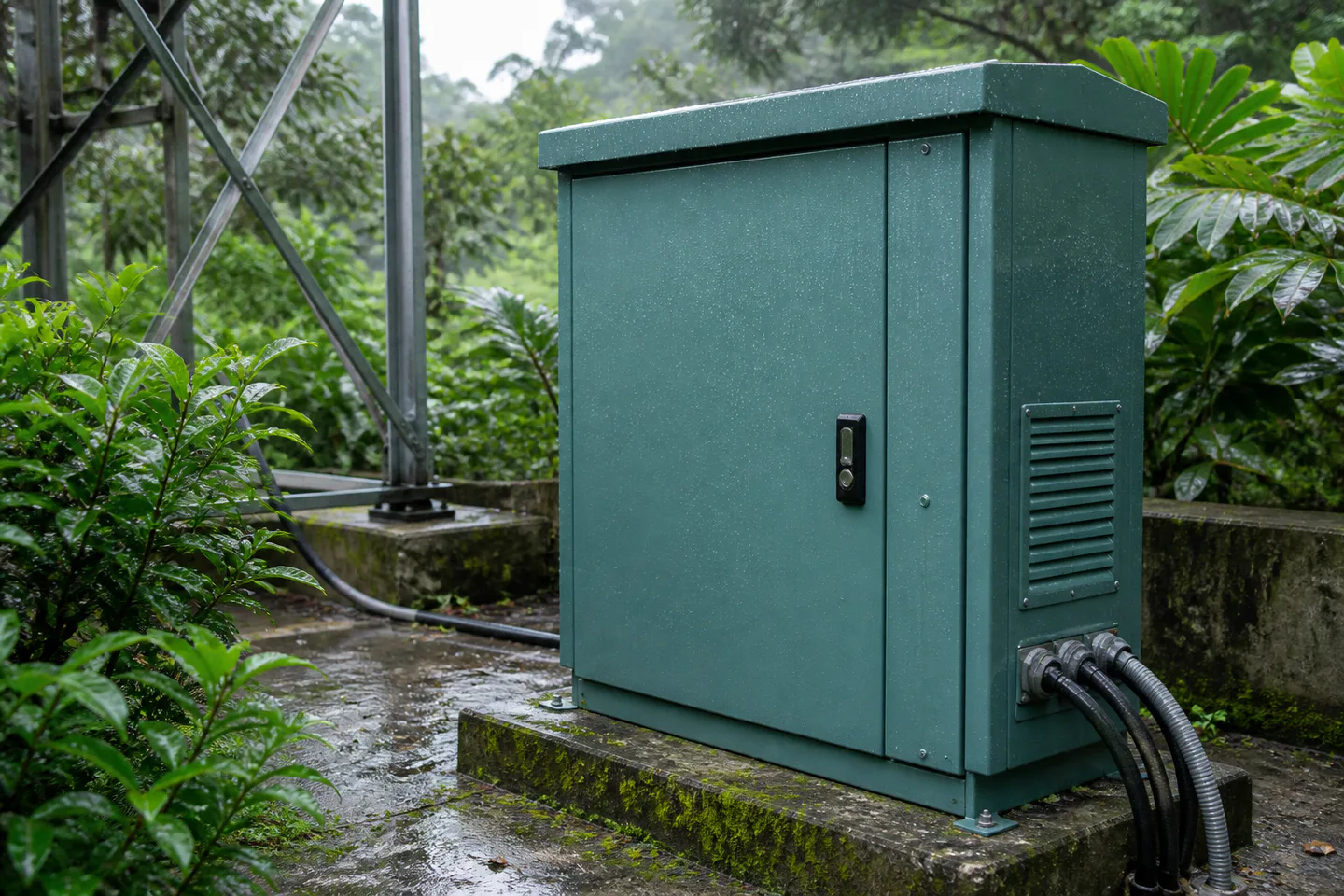 Illustrative visual
Anti-Mold & Anti-Algae Coating
Protective coating for industrial surfaces exposed to persistent humidity, mold or algae.
View product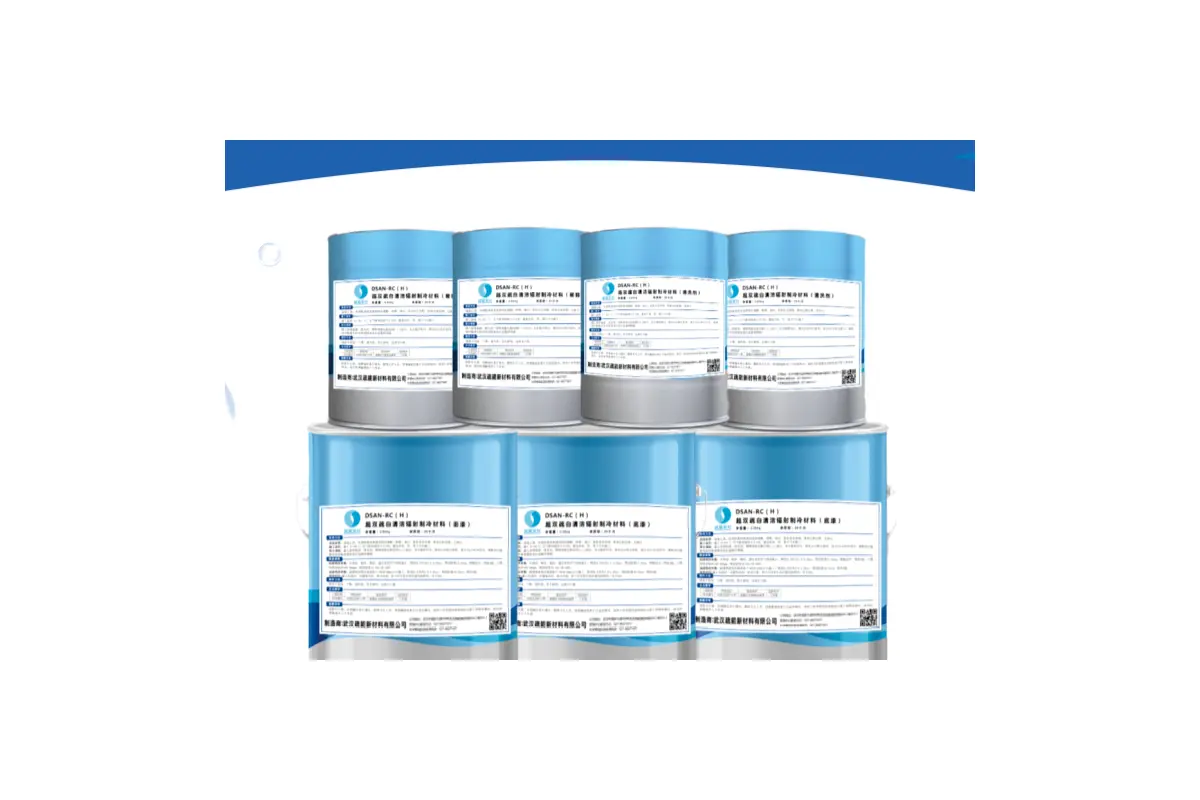
High-Reflectance Radiative-Cooling Coating
Solar-exposed surface coating for passive cooling evaluation on outdoor equipment and structures.
View productProduct enquiry
Discuss DSAN-S2001-(III) Anti-Icing Coating.
Tell us the application, substrate, operating environment, development goal or market opportunity.