Industry insight · 8 min read
Battling Blade Icing: How to Evaluate an Anti-Ice Coating
How to test anti-icing coatings on wind-turbine blades: reproduce the icing conditions, measure ice adhesion, check erosion resistance and follow performance in the field.
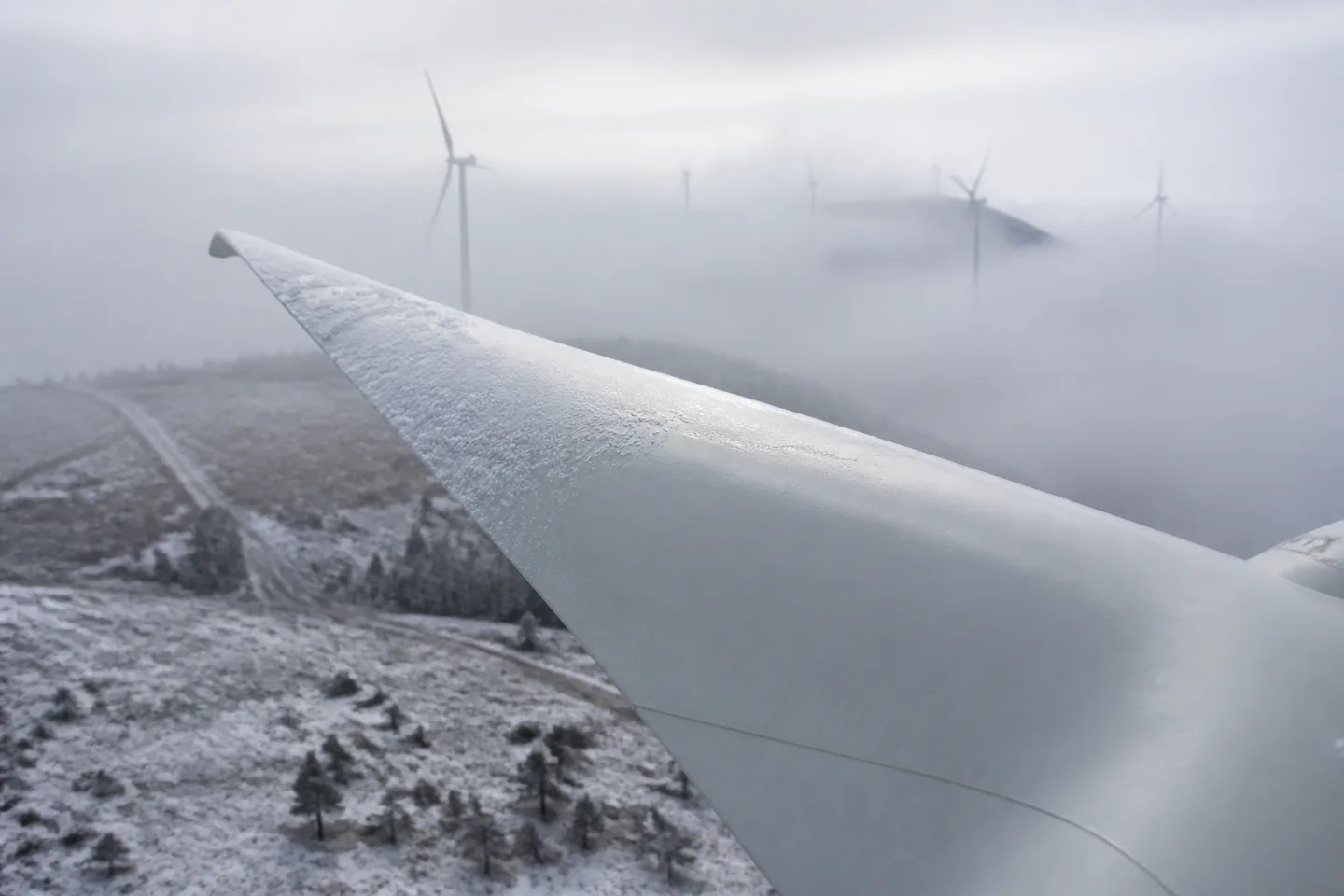 Illustrative visual
From laboratory tests to blade trials
Use the results from each stage to decide whether the coating is ready for a larger trial.
- Icing event
Define temperature, water, droplets, wind and exposure time.
- Surface response
Compare treated and control surfaces under the same procedure.
- Ice adhesion
Use a stated geometry and loading method.
- Durability
Weather or wear the coating, then repeat the icing checks.
- Field monitoring
Monitor weather, turbine state, inspection and maintenance.
Describe the icing conditions at the turbine
Rime, glaze, mixed icing and freezing precipitation leave different conditions on a blade. Record air and surface temperature, liquid-water delivery, droplet size range, air speed and exposure time, as well as the blade finish and operating state. Specify the result you need: delayed freezing, less ice accumulation, lower ice adhesion, easier shedding or a shorter recovery time.
Distinguish anti-icing from de-icing
Anti-icing aims to delay or reduce ice attachment. Ice reduction is a measured improvement compared with a control, while de-icing removes ice that has already formed. A passive coating may work alongside ice detection, operating controls or active systems. Claims that it keeps blades ice-free, or can replace those systems, require testing of the complete system.
Use contact angle for initial screening
Contact angle and roll-off measurements show how water wets a surface under the test conditions. On a rotating blade, supercooled droplets may strike, spread and freeze before they can leave. Dirt and wear can also change the coating. Compare freezing behavior, ice coverage and ice adhesion with a matched control, check repeatability, and repeat the measurements after the relevant conditioning.
Test the coating on the intended blade finish
Use the specified gelcoat, topcoat, composite skin or repair layer. Reproduce the cleaning, preparation, primer, film thickness and cure. Tests may need to cover adhesion, freeze-thaw cycles, leading-edge rain erosion, abrasion, ultraviolet exposure and temperature cycling. Check flexibility, repairability and surface quality as well. Where practical, repeat the ice measurements on the same coating system after conditioning.
Follow laboratory work with a controlled field trial
After defining the application, compare coated and control specimens in the laboratory, then check performance after durability testing. Progress to a representative blade-area trial and controlled field monitoring. Record weather, turbine state, inspections and maintenance alongside the comparison results. A short demonstration cannot establish service life across operating conditions; look for repeatable improvements that can be maintained on the turbine.
What to include in a blade-coating test
This is a test-planning guide. The blade OEM, owner and responsible engineer set the project acceptance limits.
- Actual finish
Use the intended gelcoat, paint or repair layer.
- Matched control
Run an untreated or current-system comparison.
- Defined icing
Record the complete water, temperature and airflow condition.
- Erosion and weathering
Include rain, ultraviolet, cycling or abrasion as relevant.
- Retest and inspect
Repeat the measurements after exposure and record any damage or loss of performance.
References
Questions engineers often ask
Will an anti-icing coating keep a blade completely ice-free?
Performance depends on the icing conditions, blade system, coating condition and forces available to shed ice. A completely ice-free blade cannot be assumed.
What is the difference between anti-icing and de-icing?
Anti-icing aims to delay or reduce attachment; de-icing removes ice after it forms, often using heat, mechanical action or an operating procedure.
How should a wind-turbine anti-icing coating be tested?
Use a representative blade finish, defined icing procedure, matched control and agreed metrics, then repeat relevant checks after erosion and weathering.
Is water contact angle enough for selection?
No. Contact angle measures initial wetting. Selection also needs ice-adhesion and accumulation results, durability tests and measurements after exposure.
Can the coating be retrofitted to an existing blade?
Potentially, but compatibility, access, preparation, cure, inspection, aerodynamic limits and future repair must be reviewed.