Industry insight · 4 min read
Industrial Optical Windows: Test with the Real Cutting Fluid
For machine-vision and observation windows, oil repellency must work alongside optical clarity, cleaning durability and the actual coolant—not just a demonstration droplet.
 Illustrative visual
Evaluate the window as part of the imaging system
Conceptual comparison, not a claimed coating-performance result. Technical illustration of an evaluation process, not a test result or a customer installation.

- Actual fluid
Use the service coolant, dilution, temperature and splash pattern.
- Actual image
Compare clarity and contrast with matched lighting and camera settings.
- Actual cleaning
Repeat after wiping or air cleaning; track residue and surface wear.
The camera may be protected, but its window still gets dirty
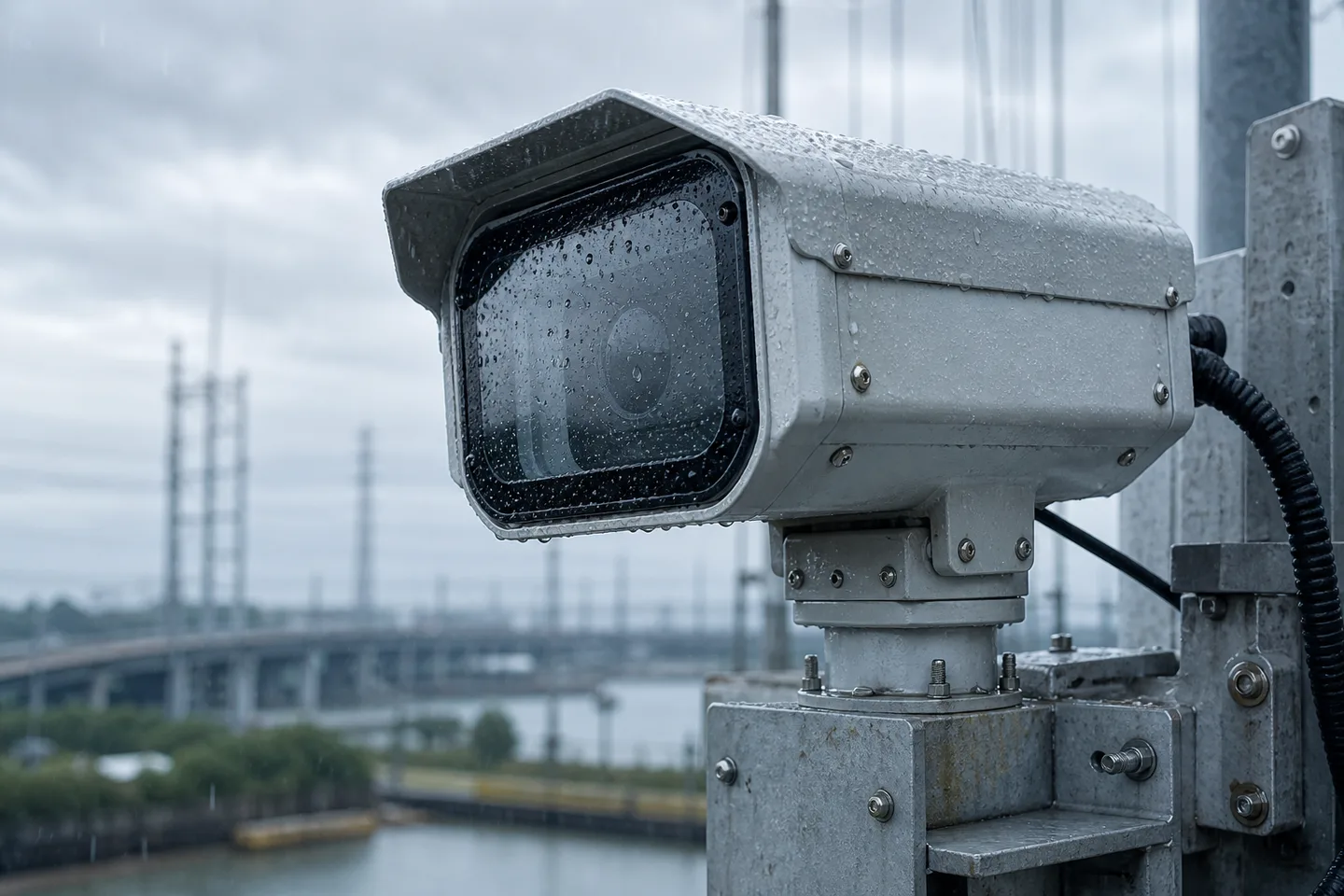
A sealed camera housing keeps liquid away from electronics; it does not keep the viewing surface clear. On machining equipment, splashes and residues may obscure the image between cleaning cycles. A useful coating project starts with a specific failure: lost contrast, obscured features or an unacceptable cleaning interval. The target is usable vision, not simply a surface that looks repellent.
Coolant is not the same as a laboratory oil
A working cutting fluid may be an emulsion containing water, oil and additives, with contamination accumulated in service. Performance against a pure test oil does not establish performance against that mixture. Supply fresh and used fluid where practical, stating dilution, temperature and exposure pattern. Compare drainage and dried residues as well as initial droplet behaviour.
Keep optical requirements in the same test
Check transmission at the relevant wavelength, haze and image contrast on the actual glass or polymer window. Use the camera, illumination and viewing geometry intended for the machine. Include adhesion, coating uniformity, cleaning-solvent compatibility and repeated wiping. A textured coating that repels liquid but scatters light may be unsuitable; a result from an opaque formulation cannot establish optical-grade performance.
Work with the cleaning system, not against it
Commercial camera enclosures already use air nozzles, air curtains and shutters; industrial sensor glass is also available with water/oil-repellent treatments. The development opportunity is therefore application-specific. Compare the current window and cleaning cycle with a treated window under the same conditions. Reduced cleaning frequency or air demand is a test objective, not a promised outcome.
A replaceable window makes a practical first trial
Begin with representative spare windows and a matched untreated or current-treatment control. Agree the minimum image quality and allowable residue before a bench trial, then test the surviving option on equipment. DSAN can discuss formulation and application development around these requirements. Optical transparency, durability and coolant compatibility must be established together; this article does not announce a validated off-the-shelf DSAN optical coating.
References
Questions engineers often ask
Can any superhydrophobic coating be used on an optical window?
No. Surface texture, film uniformity and chemistry can affect optical performance. Transparent-window suitability requires a separate formulation and validation programme where necessary.
Could the coating replace an air curtain or shutter?
That requires equipment testing. A more practical starting point is to examine whether the coating complements the existing system and extends the useful interval between cleaning cycles.