Industry insight · 4 min read
Radome Coatings: What Changes When Rain Meets Oily Dust?
Water repellency is only part of the problem on exposed radomes. Evaluate oily contamination, weathering and RF transmission together before choosing a coating.
 Illustrative visual
Three surface conditions worth comparing
Illustrative test sequence. The arrows do not represent measured signal improvement. Technical illustration; not measured performance. Blue indicates water and amber indicates oil or soiling where shown.
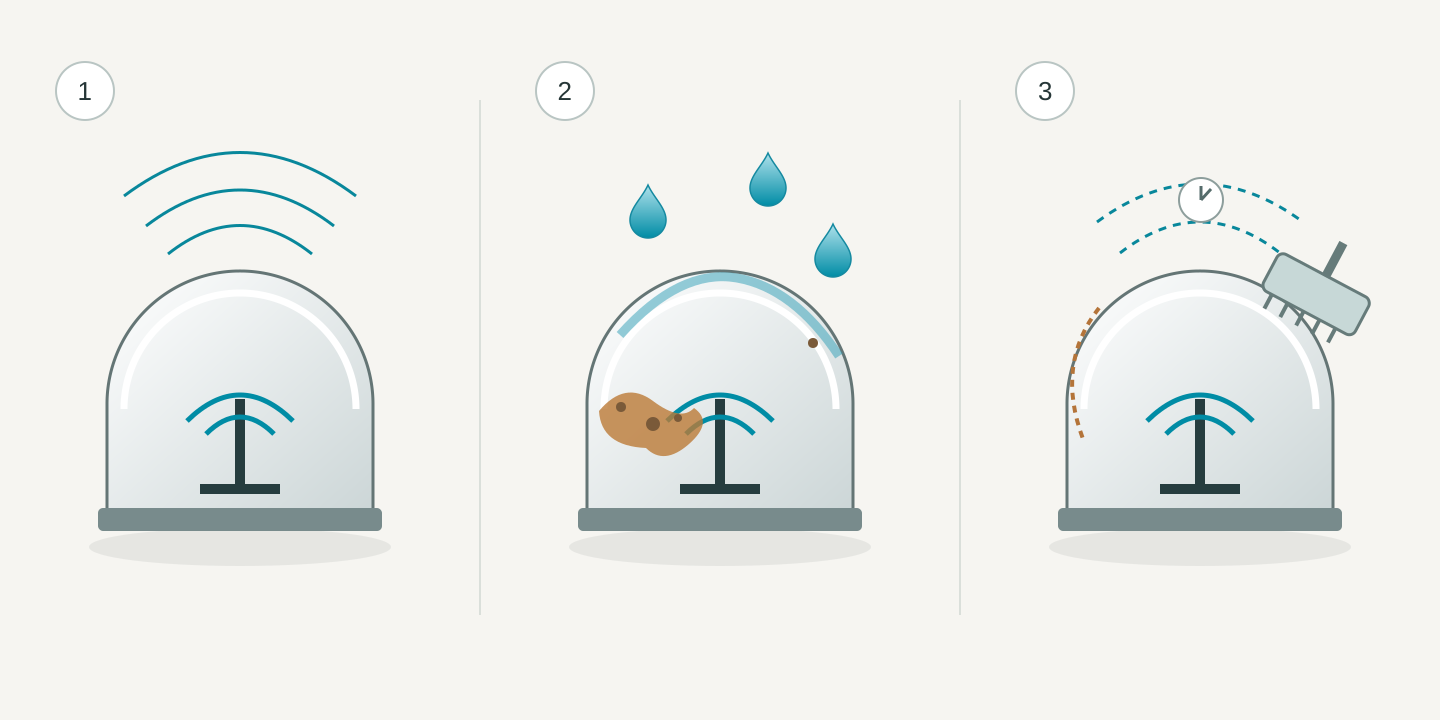
- Clean and dry
Establish the coating's own effect on transmission.
- Wet and contaminated
Add representative water and deposits; measure the complete surface response.
- Aged and cleaned
Repeat the same measurements after weathering and maintenance.
A clean water droplet is only the starting point
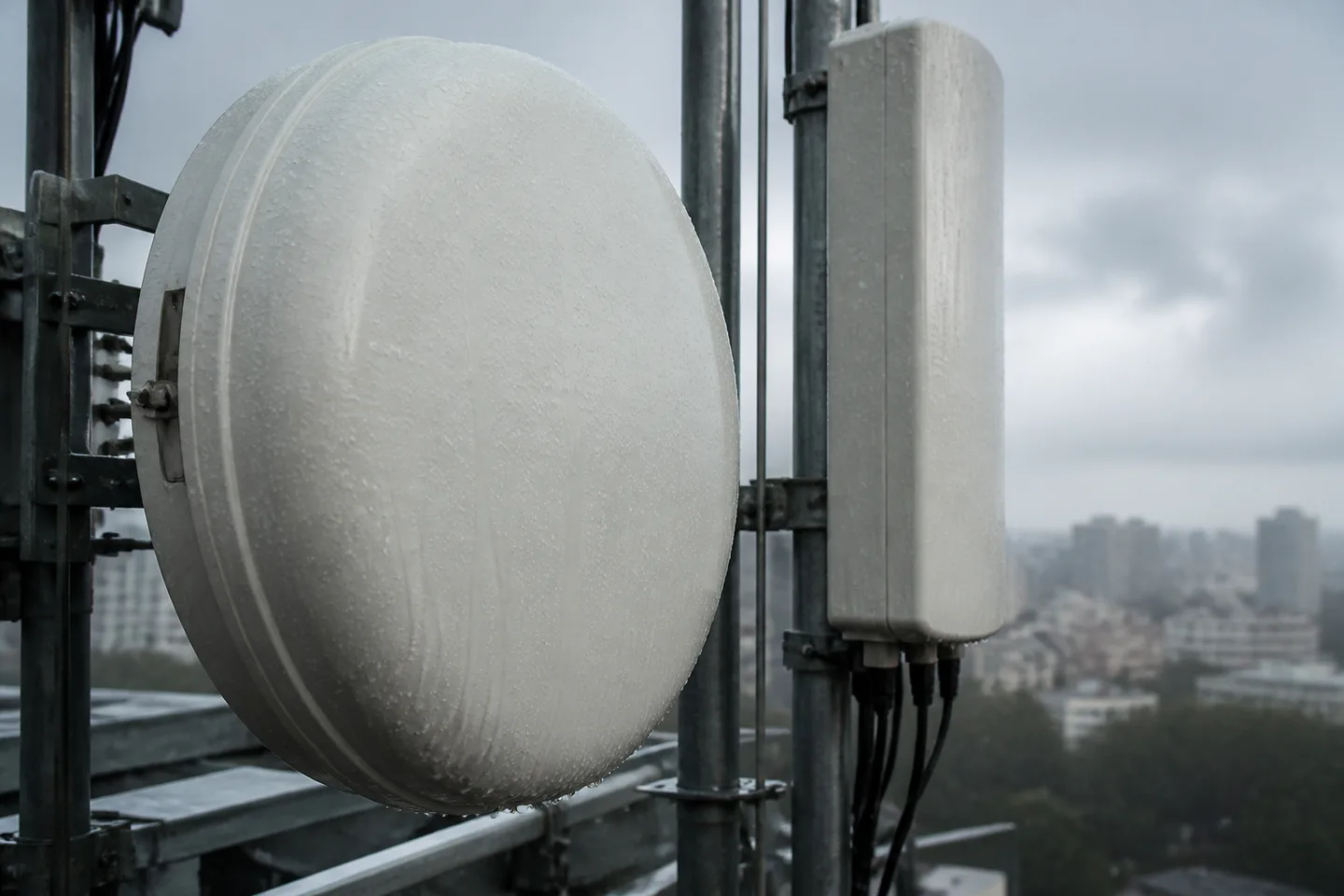
An exposed radome may face rain, road spray, oily dust and repeated cleaning. The useful question is how its surface behaves after these exposures, not simply whether water beads on a new sample. Water repellency can help limit a persistent surface film; oil repellency needs separate evidence using the contaminant actually encountered.
There is a real distinction between water and oil repellency
AFC's public description of Hydrolam 2000 distinguishes its hydrophobic behaviour from oil repellency and warns against oil contamination. A 2019 radome-coating study also evaluated water/oil behaviour alongside RF transmission and weathering. These are useful precedents, not evidence that any particular DSAN formulation already meets a radome specification.
Test the signal as well as the surface
Use the intended radome polymer, composite or existing finish, with a controlled coating thickness and cure. Compare the current finish with the proposed treatment across the operating frequency band, relevant incidence angles and polarizations. Record insertion loss or transmission in clean-dry, wet and representative soiled-wet conditions. Droplet photographs cannot establish RF compatibility.
Make contamination and cleaning part of the trial
Agree a repeatable deposit of the site's oily dust or salt-bearing contamination, followed by a defined water exposure. Record drainage, retained deposits and signal performance. Then repeat after relevant UV exposure, rain erosion and cleaning. A coating that sheds water when new but needs aggressive cleaning may not improve maintenance. Include adhesion and visible damage in the comparison.
Start joint development with the actual cover
Share a radome coupon or part, its finish, operating band, contamination history and present cleaning interval. DSAN can assess a material-development route against an agreed baseline, with the equipment team setting RF acceptance limits. This is an application-specific development project: the objective is reduced surface-related loss or easier maintenance, not a universal rain-proof antenna coating.
References
Questions engineers often ask
Can a radome coating eliminate rain fade?
No. It may address additional loss associated with water or contamination on the radome. It cannot remove attenuation caused by rain along the atmospheric propagation path.
Is a superhydrophobic contact angle enough for selection?
No. Oil behaviour, coating thickness, adhesion, weathering and RF results on the actual substrate must also be checked. A larger water contact angle is not automatically a better antenna result.